Digital Presence in 2026: Why Websites Still Matter in a Noisier, Faster, More Demanding World
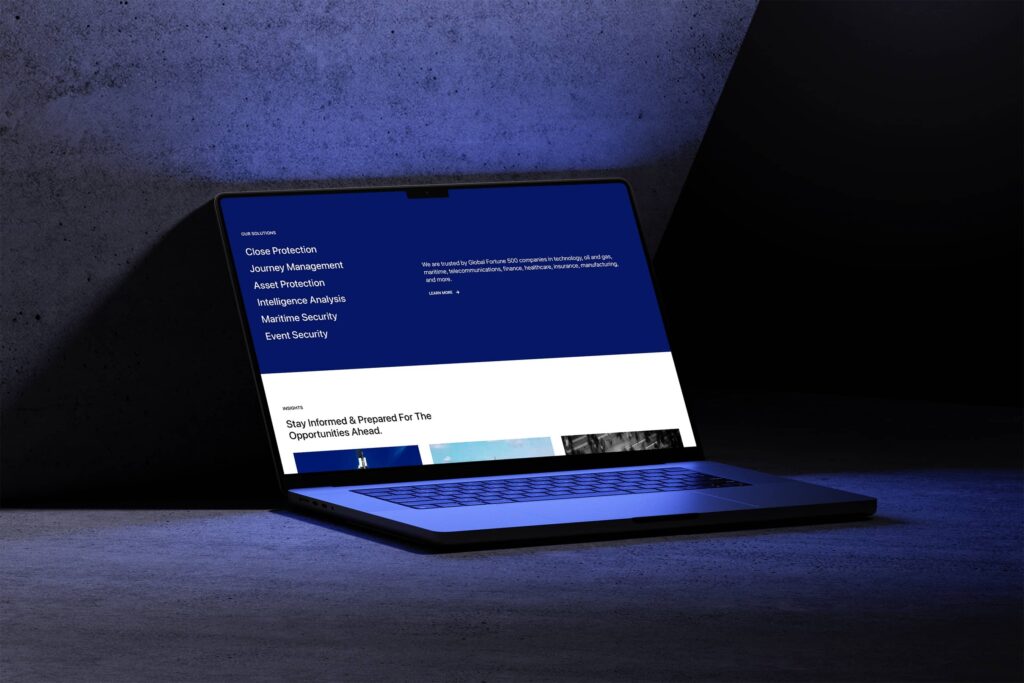
During a client call recently our client said something that has stayed with us:
She runs a thriving spa and used to redesign her website almost two years. Today? She barely maintains one. Her business is powered entirely by referrals — and for her model, it works.
But her story reveals something more important: in a world where 6.04 billion people are online, the role of a website is no longer universal — it’s strategic.
Some businesses can thrive without one, but many businesses especially those in complex, high-trust, or competitive industries, cannot.
Websites have evolved, it is no longer just a digital front door, It is a credibility engine, a discovery machine, and increasingly, a piece of operational infrastructure. As the digital landscape becomes more crowded, more fragmented, and more controlled by algorithms, the companies that win will be the ones that take ownership of their digital footprint and not leave it to chance.
Here are 6 reasons to consider when thinking about your digital home; website.
1. Discovery Has Changed — And Not Having a Website Means Not Being Found
The #1 reason people use the internet globally is still finding information (60.7%).
Search engines remain the second most common way people discover brands (32.7%), right behind social ads.
This has massive implications across industries:
- Management consulting: Enterprise clients search for case studies, leadership expertise, and credibility signals before initiating contact.
- Law firms: Corporate and private clients vet competence, domain specialisation, and trust indicators.
- Energy & logistics: Stakeholders look for compliance documentation, operational capabilities, and regional footprint.
- Education: Parents and students compare institutions online long before they speak to anyone.
- Real estate: Investors look for proof of professionalism before booking a tour or making inquiries.
In every category, the behaviour is the same:
Before people engage, they search. Before they trust, they verify.
For businesses pursuing new markets, new clients, or institutional partnerships, invisibility on search isn’t neutral — it’s a competitive disadvantage.
2. Trust Is the New Currency — And Websites Signal Legitimacy
When someone hears your company name, their instinct is universal: research.
Data confirms this: when people are evaluating a brand they may buy from, 43% rely on the company’s official website — more than review sites or price comparison platforms.
This matters deeply to industries built on trust, expertise, and authority:
- Law firms need clarity, credibility, and evidence of experience.
- Security companies need to demonstrate professionalism and compliance.
- Architecture firms need to show depth and breadth of work.
- Consultancies must publish thought leadership, frameworks, and track records.
- Pharmacies & healthcare providers must communicate accuracy and reliability.
- Agriculture and logistics firms must show transparency across their supply chains.
A website isn’t “just a website’, it’s your reputation, structured and displayed intentionally.
It is the brand’s single source of truth — controlled by you, not by algorithms or shifting platform rules.
3. Social Media Is Now Rented Real Estate — Not a Reliable Home
Many brands grew on social media. But in 2026, the ground is shifting.
- 94.1% of internet users are on social platforms
- But 80.3% of TikTok users are there for entertainment — not brand research
- Platform visibility changes overnight
For industries where stability, compliance, and long-term trust matter, depending solely on social channels is a liability.
You don’t own your audience, you don’t control the algorithm and you don’t decide who sees your message.
A website is the opposite. It lets you:
- Capture leads and emails
- Structure your story
- Publish materials without platform restrictions
- Build long-form trust
- Present complex offerings clearly
- Create landing pages for specific client segments
In other words, it gives you control.
4. Websites Are Now Operating Systems — Not Just Marketing Assets
Digital behaviour is shifting from browsing to transacting:
- 56.5% of internet users shop online weekly
- 74.5% visited a shopping or service site in the last month
This has transformed the website from a “brochure” into a business tool:
For professional services:
Consulting / legal / HR / architecture
→ qualification forms, bookings, proposal automation, thought leadership hubs
For logistics & energy:
→ shipment tracking, compliance documentation, investor information
For real estate:
→ virtual tours, property search, lead capture, investor decks
For education:
→ admissions pipelines, course enrolment, parent/student communication
For film, media & entertainment:
→ portfolios, licensing portals, submission systems, ticketing, custom experiences
For agriculture:
→ product catalogues, wholesale portals, supply chain transparency
For pharmacy & healthcare:
→ appointment booking, medical information, online orders, intake forms
Across nearly every industry, the website is becoming part of the operational backbone — reducing friction, strengthening trust, and improving conversion.
5. Mobile Is the Primary Platform — And Poor Mobile = Lost Business
- 59.14% of all web traffic now comes through mobile
- 96% of internet users access the web via smartphone
This matters because your next enterprise client, investor, student, or partner will likely evaluate you from their phone. If what they see is slow, broken, or hard to navigate…they quietly leave.
A great mobile experience is not design indulgence, it’s an act of respect for the people who choose to engage with your brand.
6. Who Truly Needs a Website — And Who Doesn’t
Not every business needs a website. Some can succeed fully on referrals, relationships, and existing demand.
But businesses that fall into any of these categories absolutely do:
- You sell to enterprises or institutions
- You compete for RFPs
- You differentiate through expertise and credibility
- You operate across regions
- You need to communicate trust at scale
- You want to own your digital footprint
- You operate in a regulated industry
- You need to publish thought leadership or showcase complex work
For these businesses a website isn’t overhead, it’s strategic advantage.
The Shift: From “Having a Website” to “Owning Your Presence”
You should not build websites out of obligation. You build them when:
- They solve real business problems
- They strengthen reputation
- They reduce operational friction
- They help the world understand what makes you different
- They allow you to scale your message in a crowded marketplace
With Google now receiving 83.3 billion visits a month, the opportunity to be found — and to shape perception — is larger than ever.
In an era of noise, speed, and competition, your website is not just where people find you, it’s where you define yourself.